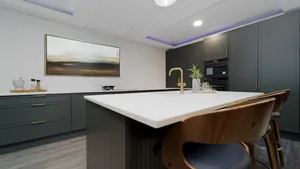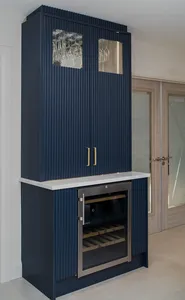
Most homeowners searching for a contemporary kitchen end up with a modern one. The two terms get used interchangeably, by designers as often as by clients, and the difference matters more than it might seem: confusing them is how you end up with a kitchen that looks dated within five years. Bespoke contemporary kitchens are handcrafted to your specific home and built around how you actually use the space.
Contemporary vs Modern: Why the Difference Matters
“Contemporary” does not mean modern. That distinction is not semantic pedantry. It is the difference between a kitchen rooted in a specific design era and one that evolves with how design thinking moves.
Modern kitchen design has a fixed visual language: it came out of the mid-20th century Bauhaus and Scandinavian movements. Flat planes, primary geometry, functionality over sentiment. It looks deliberate and consistent because it is anchored to a historical moment.
Contemporary design, by contrast, means “of the moment.” It pulls from wherever the best ideas are right now. You will see contemporary kitchens that are warm and material-rich alongside ones that are almost architectural in their restraint. What they share is not a visual signature but an intent: to create a space that feels current, personal, and alive. That is harder to do well than it sounds.
A truly bespoke kitchen in the contemporary style does not apply a trend. It interprets one. The difference, in practice, is a kitchen that still looks right in fifteen years versus one that dates in three.
What Does a Contemporary Kitchen Actually Look Like?
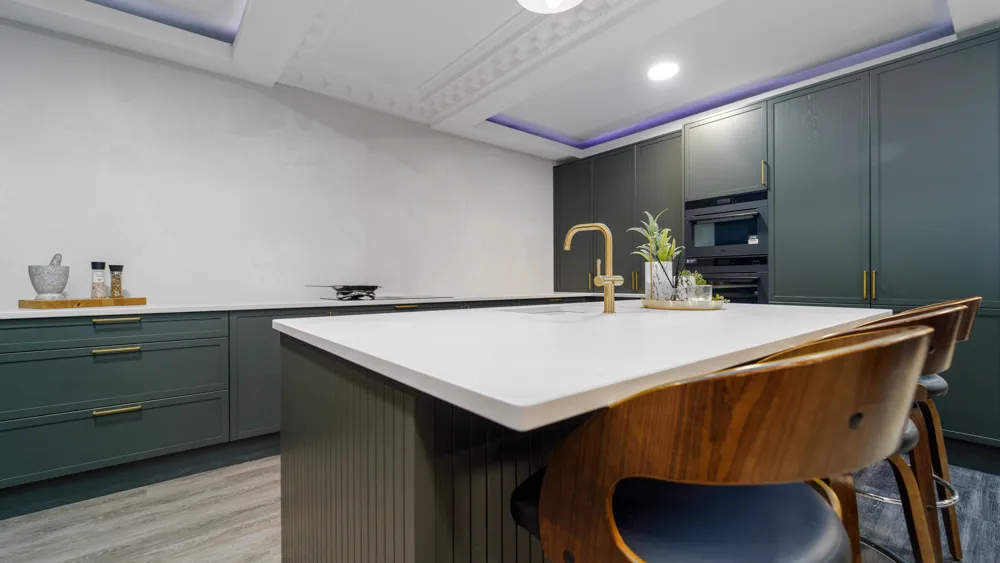
Contemporary style is not a single look, but there are recurring threads worth understanding before you sit down with a design team.
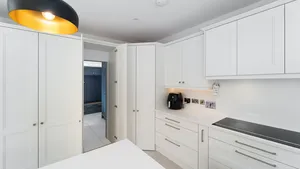
Handleless and near-handleless cabinetry remains dominant. Recessed finger pulls, push-to-open mechanisms, and integrated J-profile handles all create that clean visual plane without eliminating practicality. The kitchen reads as furniture rather than fitted units.
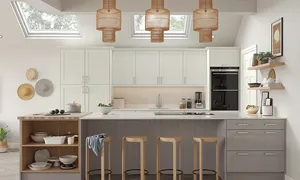
Material contrast has replaced the all-white kitchen as the primary way to bring personality into a contemporary space. Paired finishes tell the story: a lacquered door against solid oak joinery, a matte cabinet against a polished stone worktop. Too much of one material and the kitchen looks either stark or busy. The skill is in the proportion.
Integrated appliances remain non-negotiable in a properly resolved contemporary kitchen. Ovens, fridges, and dishwashers concealed behind matching cabinetry panels or handled doors keep the visual plane intact and give the space a coherence that freestanding appliances undermine.
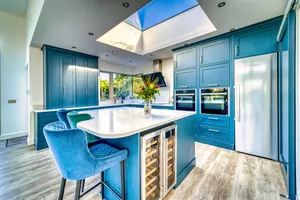
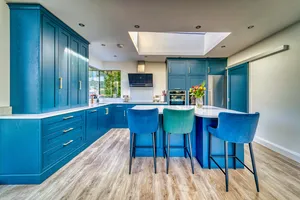
Open-plan integration is central to how contemporary kitchens are designed now. The kitchen is no longer a separate room. It is a design statement that anchors an entire living space, which raises the standard considerably. Every finish has to hold up to scrutiny from multiple angles and from rooms it was not traditionally expected to address.
Colour has come back in a meaningful way. Deep greens, warm navy, and earthy terracotta tones are present across contemporary kitchen design in Ireland and abroad. What is interesting is that these are not trend colours being bolted onto an otherwise neutral palette. At their best, they are structural decisions that give the entire interior a point of view.
Why In-House Manufacture Changes the Result
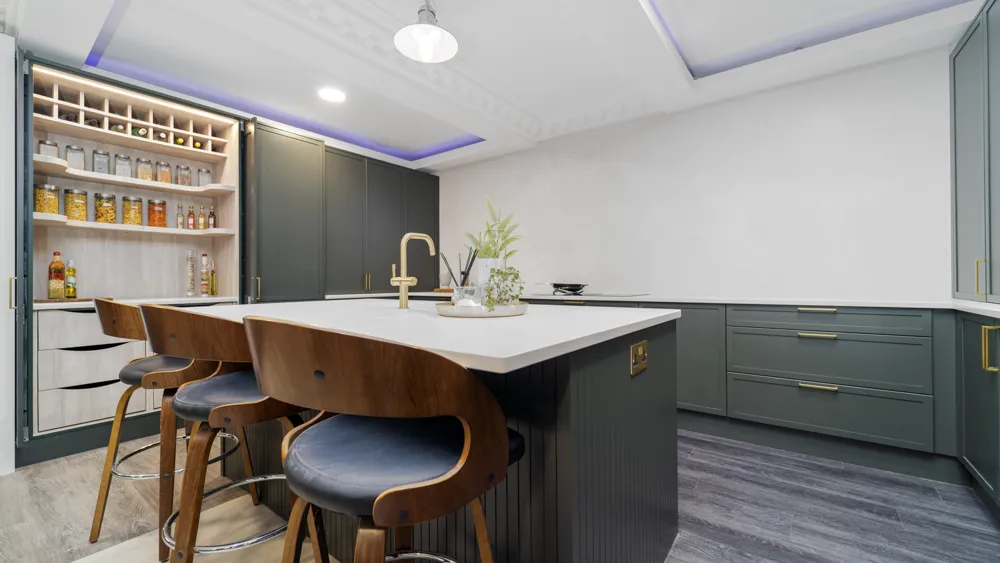
Most kitchen companies buy their carcasses and cabinet components from a supplier, then finish and install them. The design brief is theirs. The furniture comes from elsewhere. That model works well for standard kitchens and standard spaces. It is not the right model for a contemporary bespoke kitchen, and here is why.
Contemporary kitchens live or die on precision. The whole aesthetic depends on tolerances. A handleless door that does not sit flush, a worktop joint that is not perfectly mitered, a panel that does not align with the ceiling line: in a shaker kitchen with its traditional detailing, these things are less visible. In a contemporary kitchen with its clean lines and minimal ornamentation, there is nowhere to hide.
High-end bespoke manufacturers hold door alignment and worktop joints to within 1mm. At that level, the difference between furniture that looks resolved and furniture that looks assembled becomes visible to anyone standing in the room.
At Aloco Kitchens, every kitchen is designed and manufactured in our own factory in Santry. Our craftsmen make the furniture from the ground up. When a dimension needs to change because a wall is out of square or a ceiling has a drop, it changes in the workshop before installation begins, not during it.
That matters more than it might seem: up to 40% of renovation projects encounter unexpected site conditions that affect fit. That control over the entire process, from material selection to the final fit, is the reason bespoke kitchen design genuinely delivers on what the word bespoke is supposed to mean.
Designing and manufacturing under one roof also means the team that designs your kitchen speaks directly with the team that builds it. Details that would be lost in a handover document, such as how a shadow line meets a cornice or how a cabinet handles an awkward corner, are understood and resolved before they become problems on site.
When Irish homeowners renovating at higher budgets are told that local manufacture reduces lead times and improves quality control, 60–70% say they actively prefer it. The Santry factory is not a differentiator we invented for the brochure. It is the reason the kitchens we build hold up the way they do. A modular kitchen installed well can look excellent on the day.
The question is how it looks in ten years, and whether it still fits the room it was made for rather than the room it was sized for.
Does Contemporary Design Work in an Older Irish Home?
Irish homes present specific design considerations that generalised contemporary kitchen content tends to ignore.
Period properties across Dublin, Wicklow, and the wider Leinster area, from Victorian terraces to Edwardian semis, have proportions and architectural details that contemporary kitchen design needs to respond to rather than override. A handleless gloss kitchen dropped into a Victorian return in Clontarf, with its original coving and period skirting still intact, can look exactly like what it is: a foreign object. The better approach is to find a contemporary interpretation that acknowledges the architecture of the space.
That might mean using a painted flat-panel door in a softer tone rather than a high-gloss lacquer. It might mean incorporating some natural timber to bring warmth that the original interior already carries. It might mean a more considered approach to the ceiling line and how cabinets relate to it.
In newer builds and open-plan extensions, the contemporary kitchen has more freedom, but the challenge shifts to creating a space that feels like it was always meant to be there rather than installed into it.
The most compelling contemporary kitchens in modern Irish homes are the ones where the kitchen and the living space feel like they were designed together. The worktops, flooring, and cabinetry speak to each other rather than competing.
Storage deserves more attention than most contemporary kitchen briefs give it. It is consistently cited as the top reason homeowners regret their kitchen choices, ranking above aesthetics. Contemporary design compounds this by reducing visible storage in favour of clean lines, which means hidden storage has to work considerably harder.
A bespoke kitchen allows you to design storage solutions around how you actually cook: where the pots go, how the pantry functions, whether a kitchen island works for your household or just works in a photograph.
The Process: From First Conversation to Installation
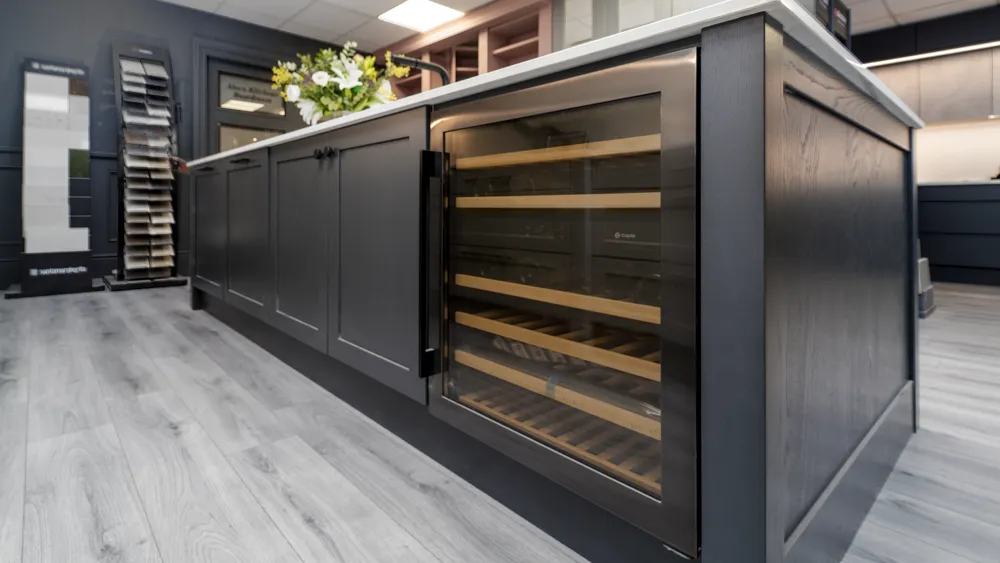
Understanding what to expect from a bespoke kitchen process helps you prepare for it properly and get more from every stage.
The first consultation is a design conversation, not a sales pitch. A good design team will spend considerable time understanding not just your taste but how you use the kitchen: how many people cook at once, whether you need a separate prep area, what appliances you use regularly and which ones can be hidden.
The aesthetic follows from the functional brief, not the other way around. If a designer leads with aesthetics before asking about how you live, that’s worth noting. The process itself, from first meeting through to installation, is designed to be managed for you. Your job is to make decisions. The company’s job is to handle everything that follows from them.
Drawings, material samples, and 3D renders come together in the design phase. This stage requires your active participation. Bring your flooring sample, your internal door profile, your wall colour. Contemporary design is sensitive to the full material palette of a room, and the design appointment is the right moment to resolve those relationships.
The manufacturing phase determines most of the quality before a single cabinet reaches your home. Lead times for a bespoke contemporary kitchen in Ireland typically run 8 to 16 weeks from order to installation.
Fully custom projects with specialist joinery or bespoke cabinetmaking details can extend to 12 to 20 weeks. Plan for the longer end. A standard contemporary kitchen with stock lacquer colours will move faster than a fully bespoke design with integrated pantry units or custom joinery. Ask for a realistic timeline and plan your renovation around it, not around an optimistic one.
Done well, installation produces no drama. The measure is accurate, the components are built to those measurements, and the fitting team knows the design. A well-run bespoke kitchen installation does not involve significant problem-solving on site. If surprises do appear at this stage, they’re almost always a symptom of something missed earlier in the process.
That is a useful question to ask any company you are considering: what happens when something does not fit on the day?
How to Know If What You’re Looking at Is Truly Bespoke
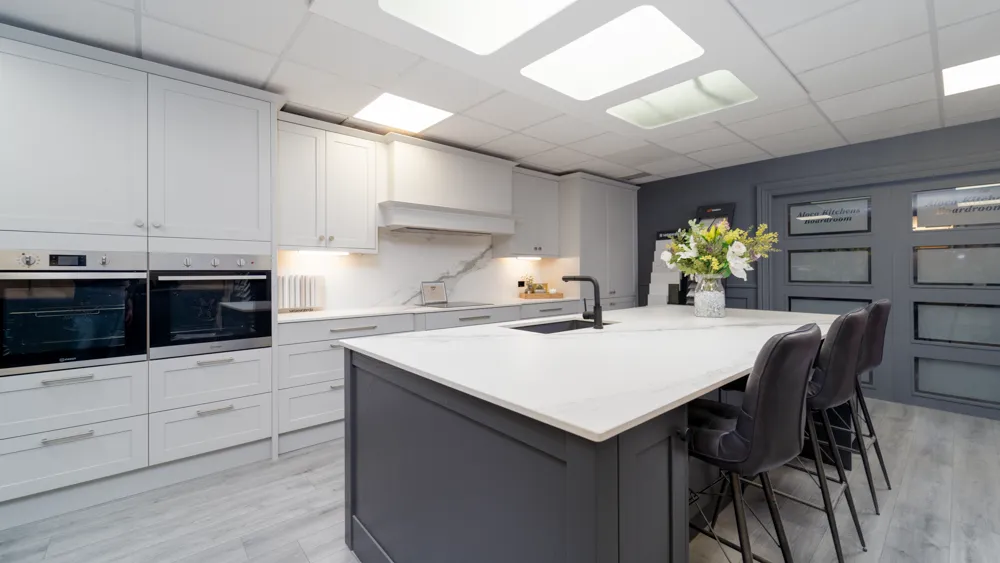
The word bespoke is used loosely across kitchen design in Ireland. It is worth knowing the difference.
A truly bespoke kitchen is made to measurements taken in your specific home, built to those measurements in a workshop, and finished in the materials you chose. No standard unit sizes. No adaptor strips concealing where a cabinet does not quite reach the wall.
A semi-bespoke kitchen is a standard modular kitchen with some degree of customisation: door colour choice, limited worktop selection, perhaps some adjustment to unit sizing within a manufacturer’s available range.
A retail kitchen with premium branding is a modular kitchen sold with a design consultation service. The units ship from a factory in standard sizes and are installed using fillers and end panels to handle the gaps.
All three have a place in the market. Only one of them is actually bespoke. If the price feels low for what is being described, ask directly where the furniture is manufactured and whether any standard unit sizes are used. The answer will tell you what you are buying.
At Aloco Kitchens, we have been specialising in bespoke designs since 1980, and the distinction has always mattered to us: every kitchen we build is made to fit the room it goes into, not the other way around.
What to Look for in a Bespoke Kitchen Showroom
Visiting a showroom is one of the most useful steps you can take, and most people do not use the visit as effectively as they could.
The displays tell you about the company’s range and aesthetic sensibility. But what you learn from a good showroom visit goes beyond that. Look at the inside of the cabinets, not just the doors.
Open drawers and feel whether the mechanism has resistance. Look at how shadow lines are finished, how worktops meet upstands, how internal corners are handled. That gap between an exceptional kitchen and an ordinary one lives in those details. Most buyers who end up disappointed after installation never opened a drawer during the showroom visit. The ones who did rarely are.
Ask whether the person designing your kitchen is involved through to installation. Ask to see completed project photographs from homes in Dublin or wherever you are based, not just the international portfolio that appears in every brochure.
When you come to our showroom in Santry, that’s exactly the kind of conversation we want to have. Not a presentation. A proper discussion about your home and what would serve it well.
Ready to Design Your Bespoke Contemporary Kitchen?
Most people begin a bespoke kitchen project by thinking about what they want it to look like. That is a reasonable place to start. But in our experience, the kitchens that hold up over decades are never the ones where the aesthetic came first. They are the ones where someone asked the harder question early: what do you want this kitchen to feel like to use every day, and what does that actually require from the design?
A kitchen that photographs well but does not work for the people living in it is a design failure. Full stop. The finest bespoke kitchens are the ones where the aesthetic and the functional brief were resolved together, not where one was dressed up as the other.
That is what bespoke kitchen design at its best actually delivers. A kitchen built around a life, not a lifestyle photograph.
If you’d like to see how we’ve applied that thinking in practice, take a look at our contemporary kitchen collection before booking your consultation.
Our design team is available for a free consultation at our Santry showroom, and you are welcome to call in without an appointment to see our current displays. We have been doing this since 1980 and the kitchens we are most proud of are not necessarily the most complex ones. They are the ones where the brief was understood properly from the start. If that sounds like the kind of process you are looking for, we would be glad to be part of it.