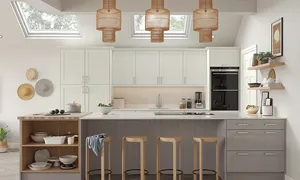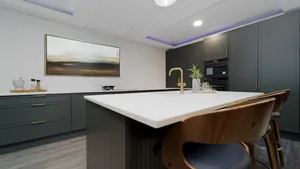
Most kitchens in Irish homes weren’t designed for the way we live now. They were built decades ago, or tacked on as extensions with odd angles, or just planned badly from the start. If you’ve got an awkward kitchen layout, you’re in good company.
The good news is that most awkward layouts are fixable without tearing the place apart. You don’t always need a full renovation. Sometimes you just need to rethink how the space is being used. Here are the changes that actually make a difference, based on the problems we see most often. If you want the full planning walkthrough before you start, our kitchen planning guide covers it all.
Sort Out Your Work Triangle First
The work triangle is the route between your sink, hob, and fridge. In an ideal kitchen layout, these three points sit close enough together that you’re not walking laps every time you cook. In most awkward kitchens, they don’t.
If space is the real problem, our small kitchen design guide and these smart storage ideas will help.
Your fridge might be on one wall, the sink on another, the hob on a third. Or everything’s crammed onto the same run with no counter space between them. Neither works.
You don’t need a textbook-perfect triangle though. You need a logical flow. Think about how you actually cook. Fridge to counter, counter to hob, hob to sink. That’s your sequence. Arrange things so that sequence makes sense, because every unnecessary trip back and forth adds up when you’re doing it every single night.
If your sink is plumbed in and moving it costs a fortune, work around it. Put your main prep area right next to it. Keep the hob close by. Store pots and pans near where you use them, not across the room. A galley kitchen works best when the sink and hob are on the same side with prep space in between.
Add an Island or Peninsula
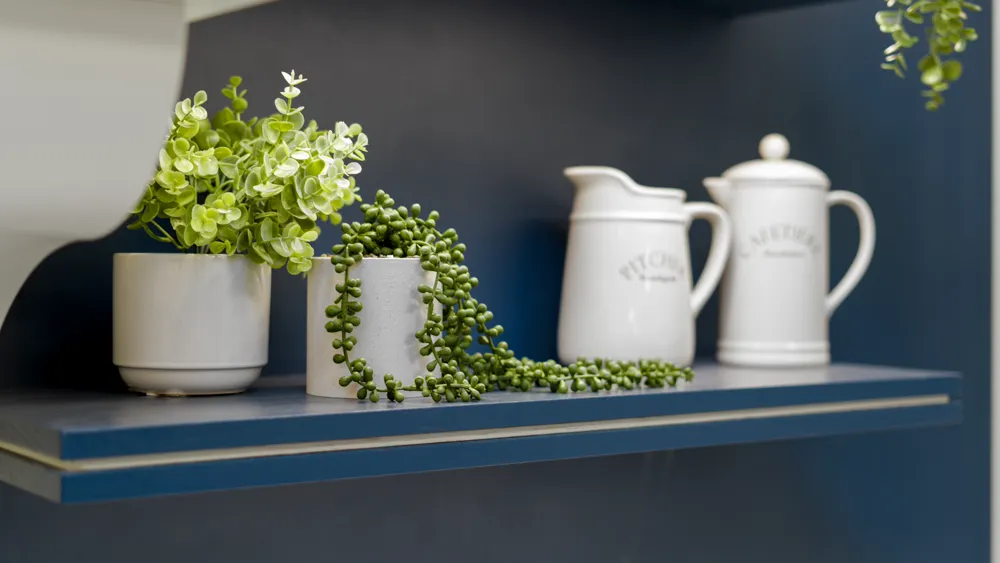
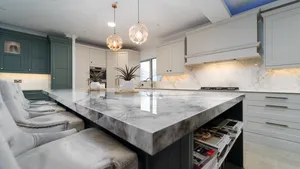
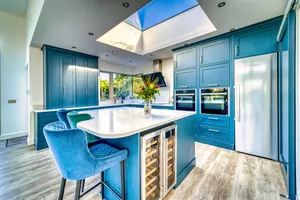
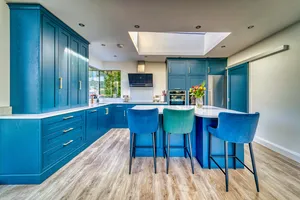
An island isn’t just a trend. It solves three problems at once: it defines the kitchen space, adds extra counter room, and gives you a place to work that isn’t against a wall. If you’ve got an open-plan kitchen that just blends into the living area with no real boundary, an island fixes that immediately.
You don’t need a massive one. Even something 90cm by 60cm adds useful prep space and creates a visual division between cooking and living. If you can’t fit a freestanding island, a peninsula works just as well. It attaches to an existing run of cabinets, so you get the benefits without needing clearance on all four sides.
One rule: you need at least 1 metre of space around an island for it to work. Less than that and doors can’t open, people can’t move, and you’ve just made things worse. Measure before you commit. Our kitchen island design guide goes into the detail if you’re thinking about it.
Fix the Corners
Awkward corners are where storage goes to die. You can’t see what’s in them. You can’t reach half of it. Pots and pans disappear and you forget they exist.
Standard corner cupboards are 60-80cm deep, but you can only really use about 30cm of that before you’re reaching in blind. The best fix is to not use them in the standard way.
A lazy Susan is the easiest swap. It rotates so everything comes to you instead of you going to it. Works well for spices, dry goods, anything lightweight. Pull-out corner units are a step up. They slide forward so you can see and reach everything at once. More expensive, but worth it if you use the corner daily.
If the corner is genuinely hopeless, just open it up. Take the door off and use it as open shelving for cookbooks or jars you actually look at. You lose some hidden storage but you gain something you’ll use every day, which is the point.
Use the Space You’re Ignoring
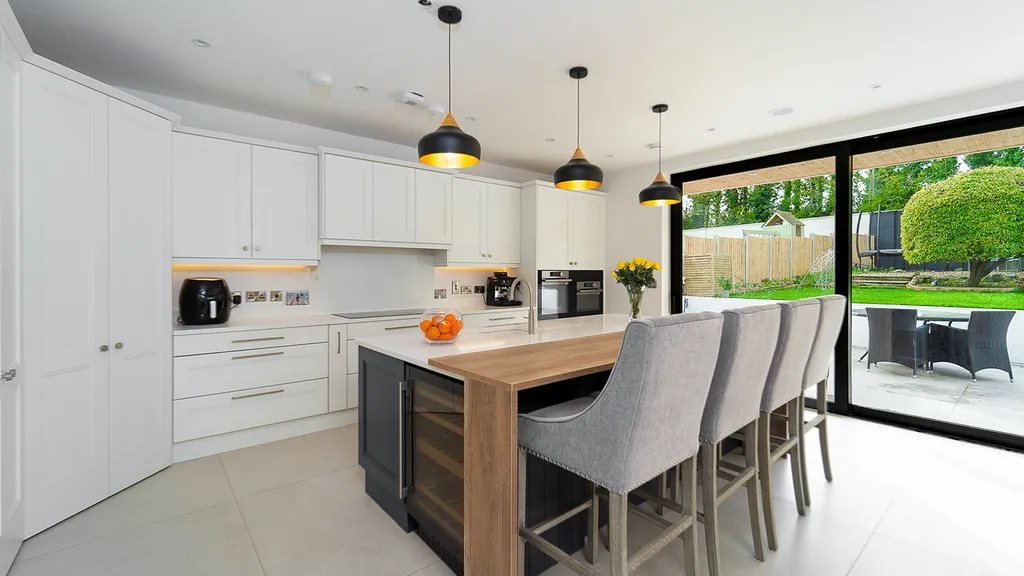
Most people think about storage from the worktop down. The space above, behind, and beside things is where the real extra storage lives.
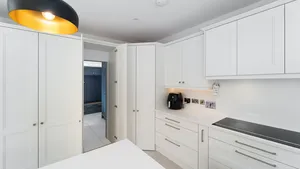
Above your units, for starters. If your cabinets stop at 2 metres and your ceiling is 2.4 metres, that’s 40cm of shelf space you’re not using. Put seasonal stuff up there. Things you need once or twice a year. Full-height cabinetry looks better and stores more because it removes that dusty gap above the units that nobody ever cleans.
Narrow gaps of 10-20cm between appliances or at the end of a run aren’t useless either. Slim pull-out units fit there perfectly: spice racks, tray holders, cutting board slots. Anything flat that doesn’t need depth.
The end panel of your cabinet run, the bit that faces into the room, is usually just blank. Mount hooks for mugs or utensils there. A magnetic knife strip on the wall takes up no counter space at all. These are small changes but they free up drawer and worktop space, which matters when the kitchen is tight.
Get the Traffic Flow Right
The most common complaint about awkward kitchens isn’t actually storage. It’s that you can’t move. Someone opens the dishwasher and it blocks the only path through the room. Two people try to cook at the same time and they’re constantly in each other’s way.
The fix is creating zones. A cooking zone around the hob and oven. A prep zone with counter space. A cleaning zone around the sink. When these are in logical spots and clearly defined, traffic flows naturally because nobody has to cross into someone else’s area.
You need one clear route through the kitchen that doesn’t cut straight through the cooking area. If that’s not possible with the current layout, it might be time to think bigger. Sometimes moving an island or repositioning a table opens up a path. Sometimes you need to accept the route and work with it.
Drawers are better than doors on lower cabinets in tight spaces, because they pull toward you instead of swinging out. Easy change, removes a lot of the bottlenecks.
When You Need More Than a Rearrange
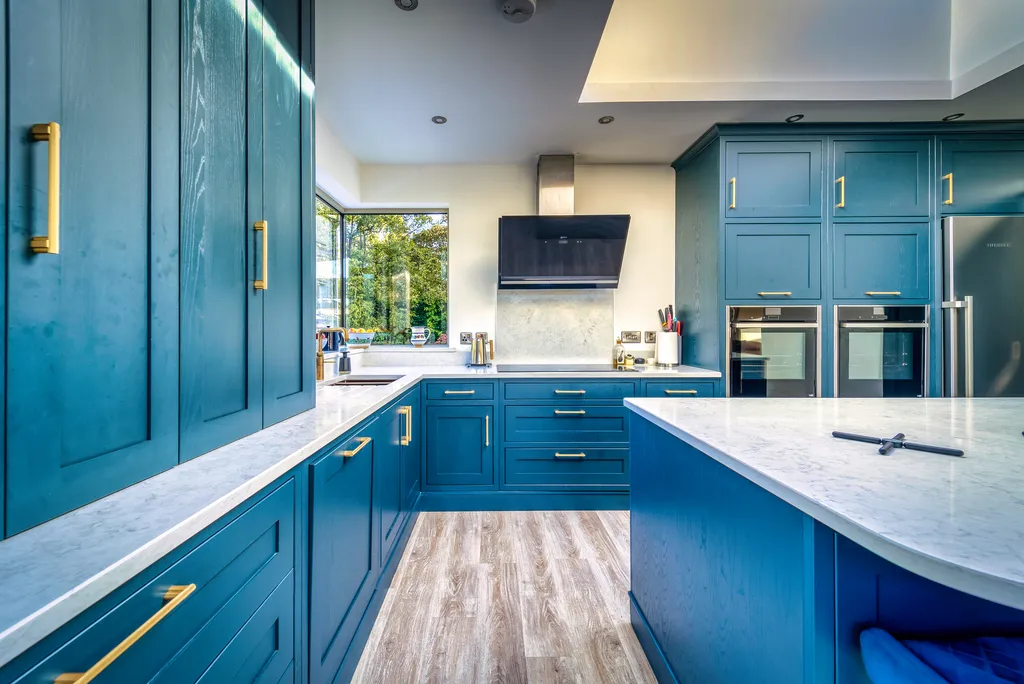
Sometimes the layout genuinely can’t be fixed by moving things around. If your kitchen is split across separate rooms that should be one space, or the only entrance is a narrow doorway that creates a permanent bottleneck, or load-bearing walls are in the way, that’s a bigger conversation.
Moving plumbing costs €1,000 to €3,000. Removing walls needs structural engineers and building regs. It’s not cheap, but if you’re already renovating, factoring these changes into the plan can completely change how the kitchen functions. Have a look at how much a kitchen renovation costs so you know what you’re working with before anything else.
The Bottom Line
An awkward kitchen layout doesn’t have to stay awkward. Start with your workflow. That’s where most of the problems actually come from. Add an island or peninsula if the space allows it. Sort out your corners. Use the vertical and in-between space you’re ignoring. And get the traffic flow working so people aren’t constantly blocking each other.
Not every kitchen needs all of this. Some just need one or two changes. The key is working out what’s actually wrong with yours before you start spending money on it. If you’re stuck, it’s worth getting a professional eye on the space. An interior designer will spot things you’ve walked past a hundred times without noticing. Get in touch with Aloco and we can take a look at what’s possible.
Frequently Asked Questions
How do you fix an awkward kitchen layout without a full renovation?
Start with your workflow. Rearrange storage so things are where you actually use them. Add a moveable island or butcher block for extra surface. Use vertical space with tall units or open shelving. Fix corner storage with lazy Susans or pull-out units. Most of these changes cost hundreds, not thousands.
What is the work triangle in kitchen design?
The work triangle is the path between your sink, hob, and fridge. Ideally these three points form a triangle with sides between 1.2 and 2.7 metres. That minimises walking while you cook. Modern kitchens with islands often work better with zones than a strict triangle, but The principle is the same: keep your most-used points close together.
How much space do you need around a kitchen island?
Minimum 1 metre on all sides. Ideally 1.2 metres if more than one person cooks at the same time. If the island has seating, allow 75-90cm per seat plus room to pull chairs out. Too big and it blocks the room instead of helping it.
Can you fix awkward corner cupboards without replacing them?
Yes. A lazy Susan is the easiest fix. Pull-out units are better if you use the corner regularly. If it’s genuinely hopeless, take the door off and use it as open shelving. Or just dedicate it to things you rarely need and stop worrying about it.
What’s the minimum width for a galley kitchen to work?
One metre between facing units is the minimum for one person to work comfortably. For two people cooking together you want 1.2 to 1.5 metres. Less than 1 metre and it feels cramped no matter what you do with the layout.